
A home, not an institution.
Savoy Place is memory care in Savoy, Illinois, built as small cottage-style homes rather than one large facility. Each home is small enough that caregivers know every resident, and the day feels like life in a household, not a hotel or a hospital.
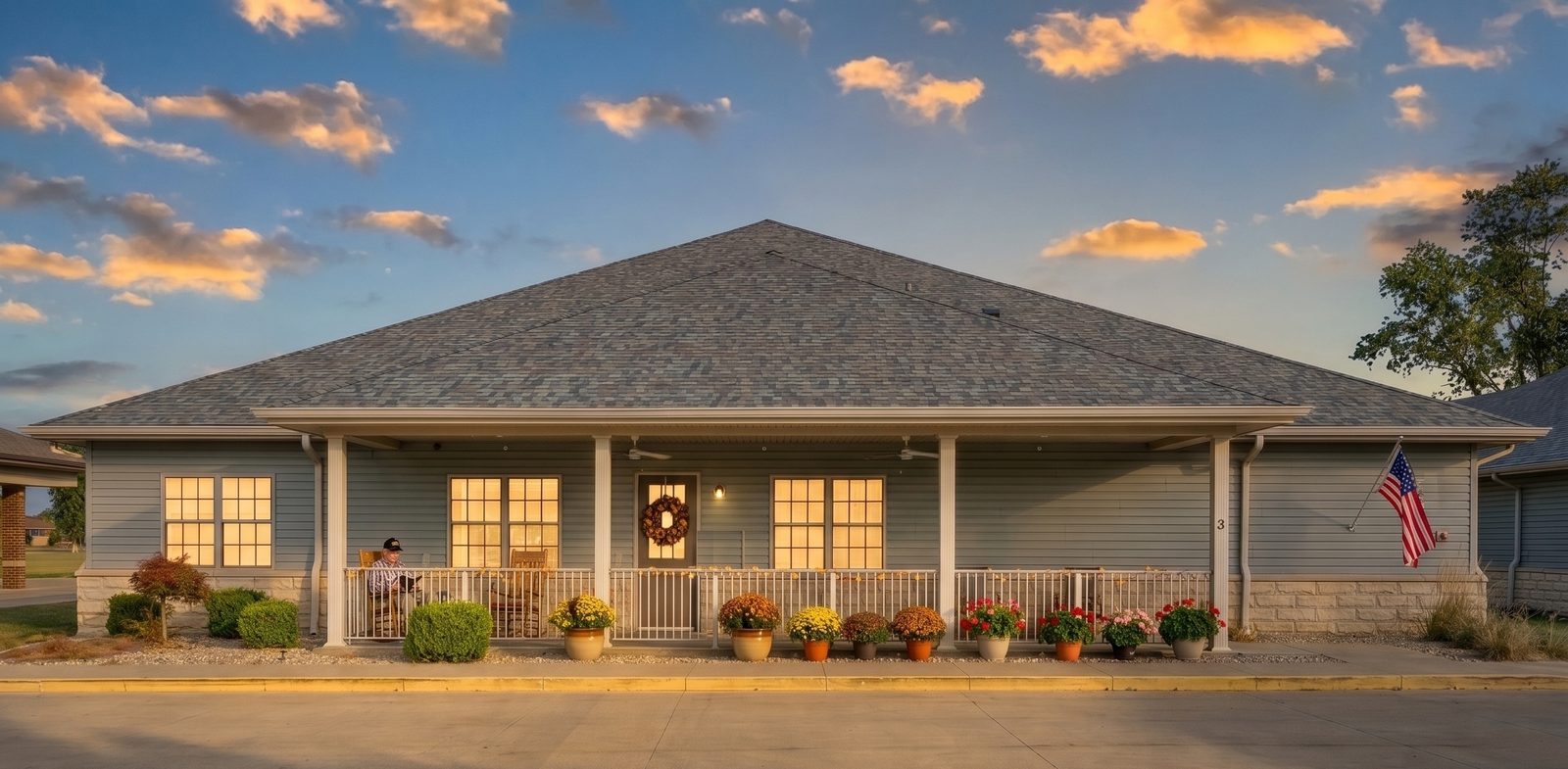
Household, not facility
Three homes, with support always nearby.
Most memory care is one large building with a nurses' station and a long hallway of rooms. Savoy Place is intentionally small: separate cottage households, each with its own kitchen, dining room, living room, and porches. Enough space to live, but not so much that anyone feels lost or overwhelmed.
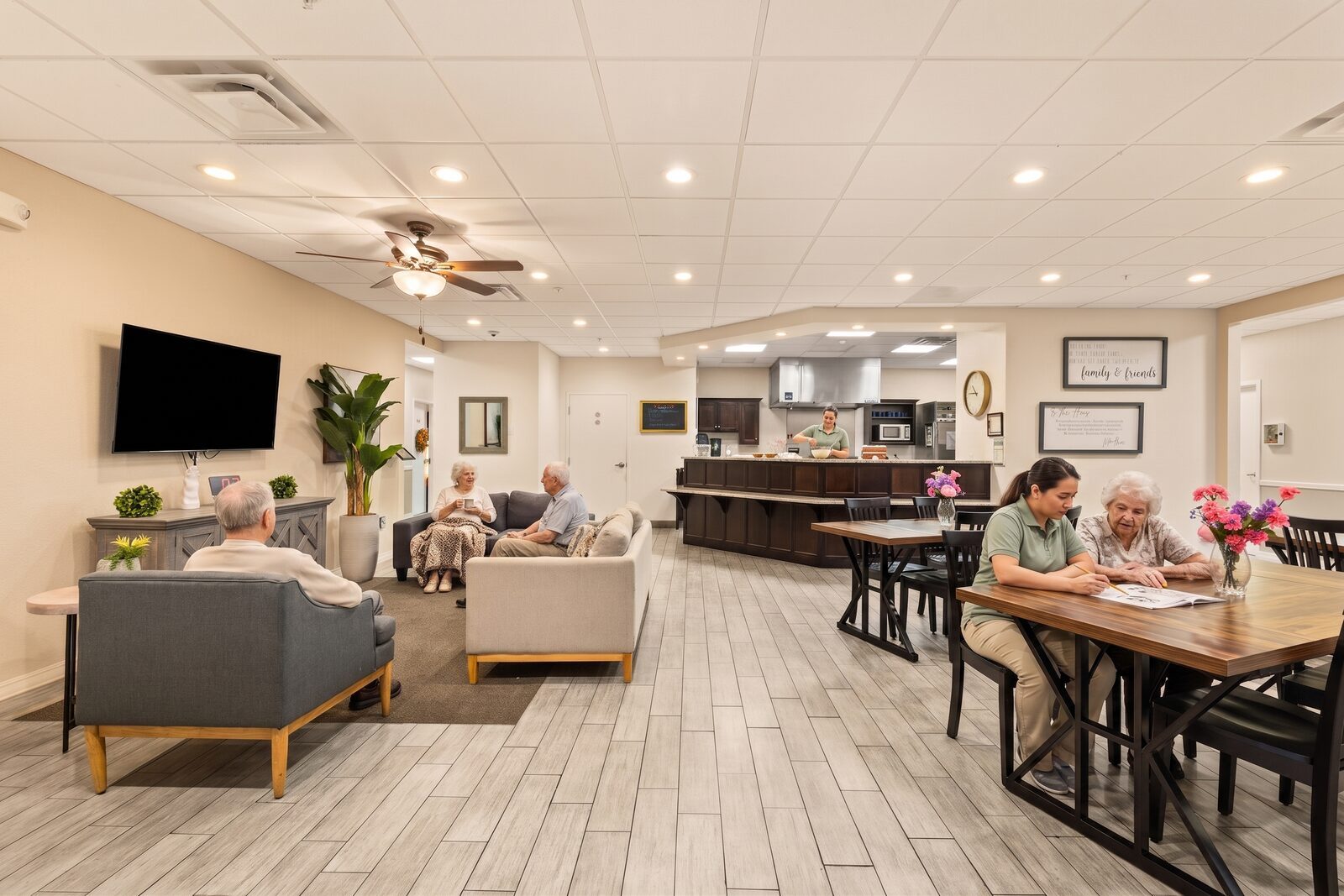
- The same faces every day. Caregivers belong to a household, not a shift rotation down a hallway, so your loved one is cared for by people who know their routines, their stories, and how they take their coffee.
- Small enough to truly know your loved one. No one disappears into a crowd here. The little things, what music your mom loves, what calms her, what makes her laugh, become the big things in memory care.
- Meals around the family table. Food is cooked right in the household, so your loved one smells breakfast and hears the conversation, the familiar cues that say it's time to eat.
- Their bedroom is private; the whole cottage is their home. We encourage families to fill the room with familiar furniture, photos, and blankets. The living room, porches, and kitchen are theirs too.
Life at Savoy Place
What matters most, every day.
Good memory care isn't about a packed activity calendar. It comes down to a few things done well: being part of a community, being genuinely cared for, staying engaged in a life that feels like your own, and being safe while doing it. That's what our small households are built to provide.
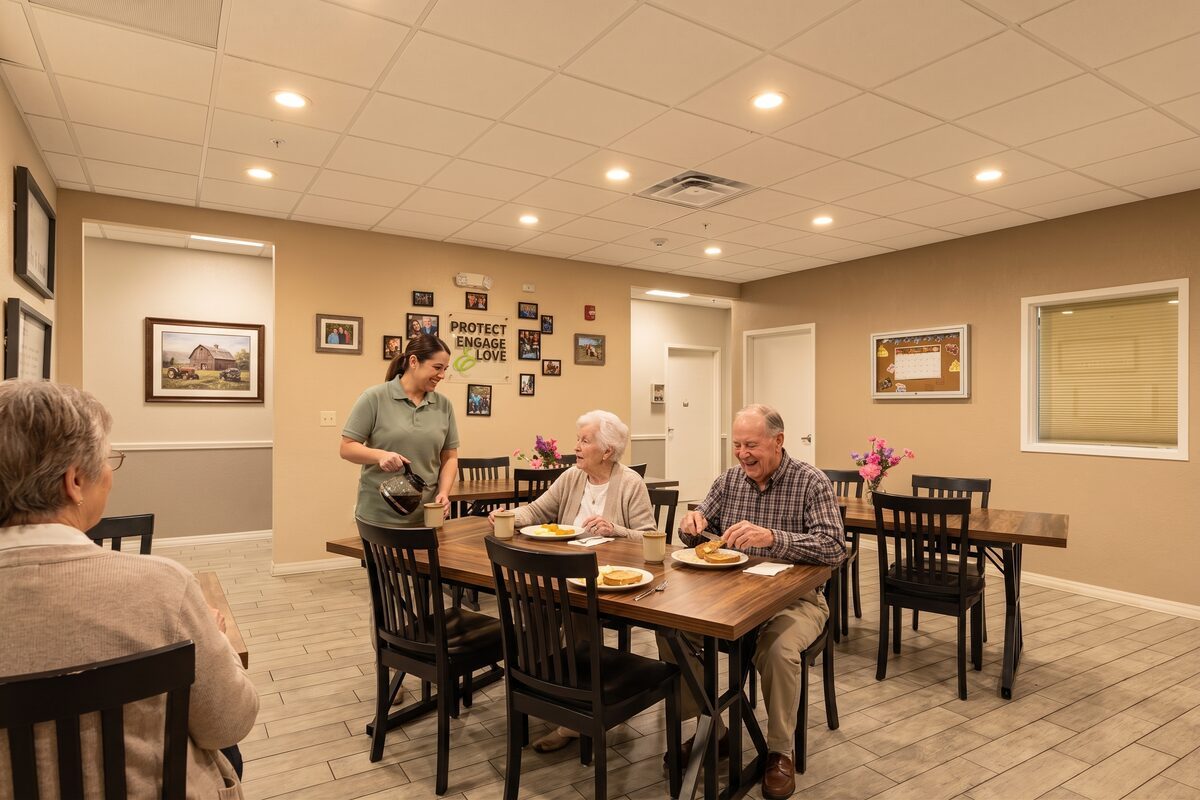 Community
A life shared
Meals around a shared table, familiar faces, and the easy company of others through the day. Someone to share a story with, a hand of cards, a quiet afternoon on the porch, the kind of daily fellowship that's hard to find at home alone.
 Care
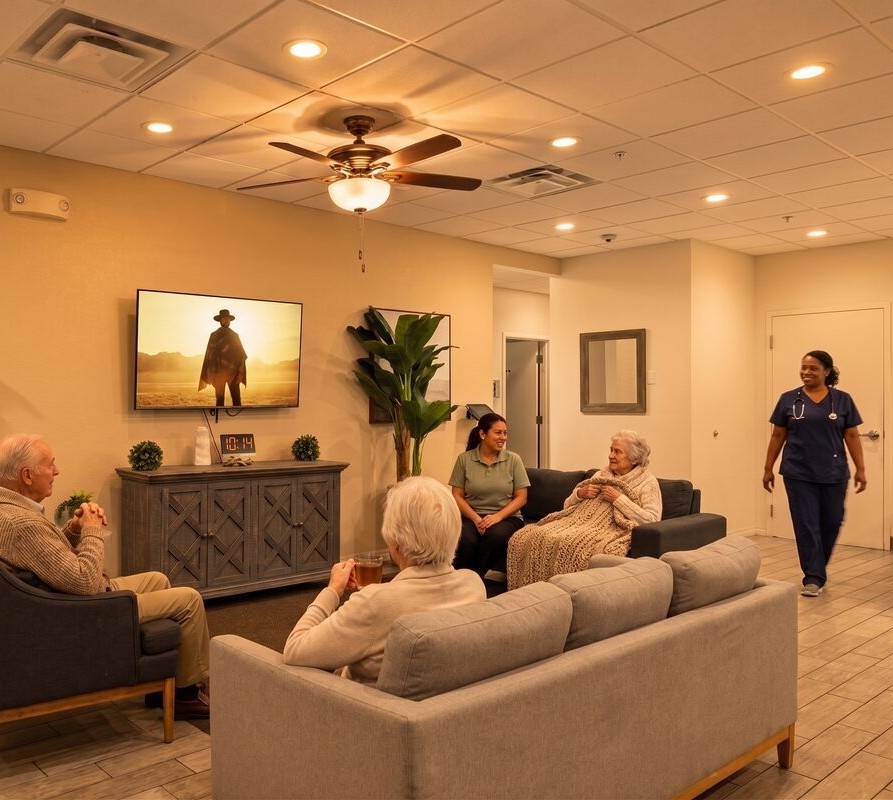
Care
Known and looked after
The same caregivers who belong to your loved one's household, so care is personal and consistent. It keeps pace as needs change, with awake staff present every night.
 Engagement
A life that feels like theirs
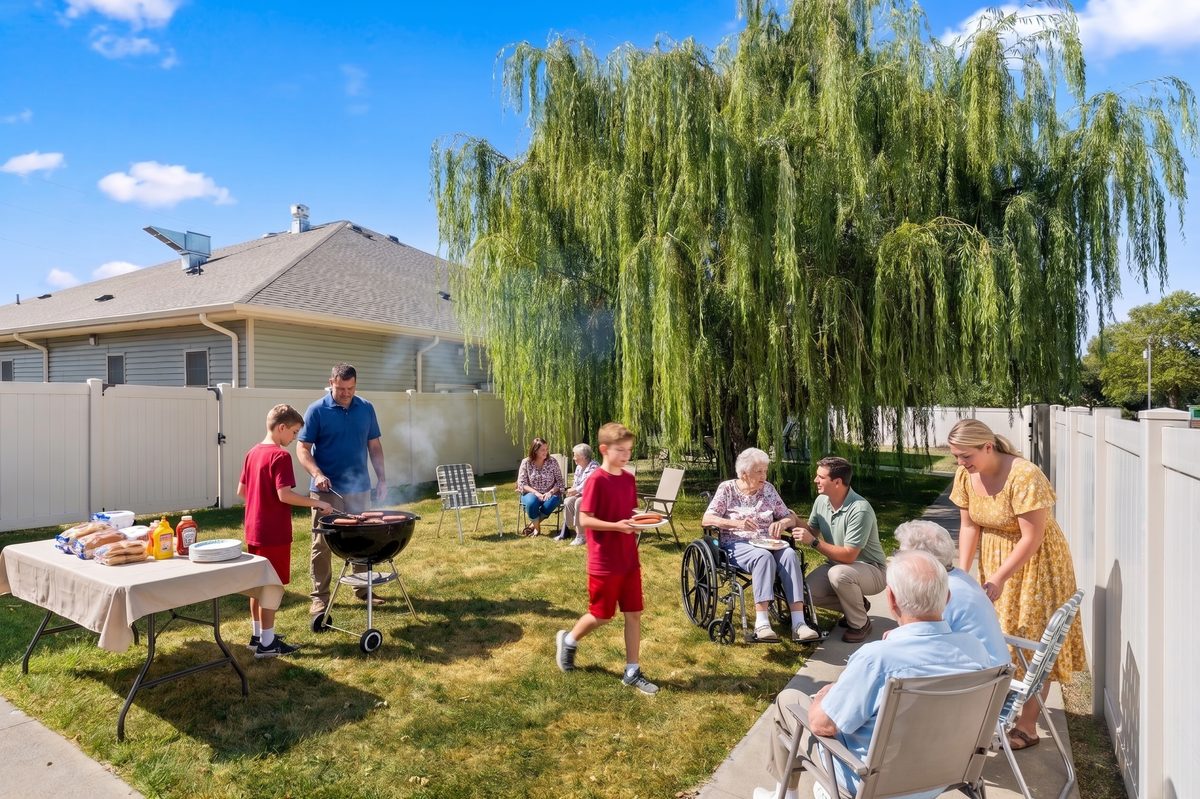
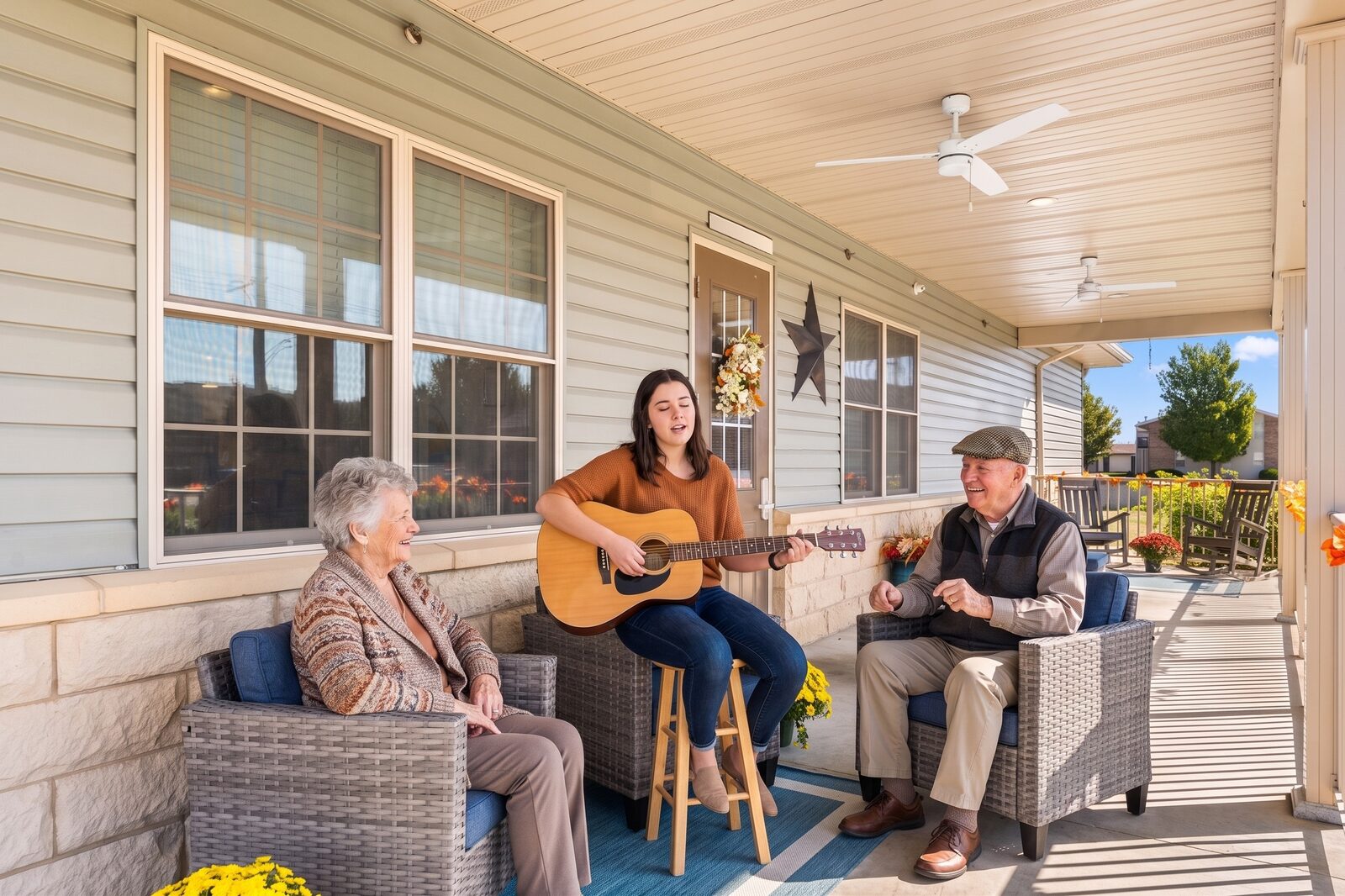
Music on the porch, cookouts under the willow, a hand of cards, time in the garden. We build around what someone can still do and enjoy, and around who they've always been.
Safety
Known by name
In small households, no one disappears into a crowd. Doors are secured for safety, and your loved one moves freely indoors and in our enclosed courtyards, cared for by the same familiar faces who know their routine.
Person first, diagnosis second
Safety without sacrificing dignity.
Memory care should keep your loved one safe without taking away their freedom or dignity. This isn't a place where anyone is confined to a room. It's their home, with secure porches and outdoor spaces, and a team whose job is to help them feel safe, understood, and successful, not corrected.
We meet them in their reality
We aren't trying to make someone with dementia live in our reality. Behavior is often communication, so we try to understand what a resident is telling us rather than simply react. The more we know about who someone was before dementia, the better we care for who they are today.
Freedom, made safe
The community is built to work with your loved one instead of against them: secured entries, enclosed courtyards, and a single-story layout that lets people move freely, indoors and out. Doors are secured for safety, while daily life stays open and unhurried.
Care that keeps pace
Because memory care is all we do, we're built for the changes dementia brings. Illinois assisted living and shared housing law limits what any community can provide, so we assess each resident's needs continuously, and if a move ever becomes necessary, we give families early notice and hands-on help through it.
You're part of the care team
You'll always know how your loved one is doing. We communicate openly and treat families as part of the team, because you are. The more you tell us about who they are, the better we can care for them.
Respite stays
Not ready for a move? Start with a short stay.
Caring for someone with dementia at home is around-the-clock work, and every family caregiver needs a real break sometimes. A short respite stay gives your loved one full care in a furnished private bedroom for a few days or a few weeks, and gives you time to rest, travel, or simply catch your breath.
Families often tell us a respite stay was also the gentlest way to find out whether Savoy Place felt like home, without committing to anything.
Ask about respite availability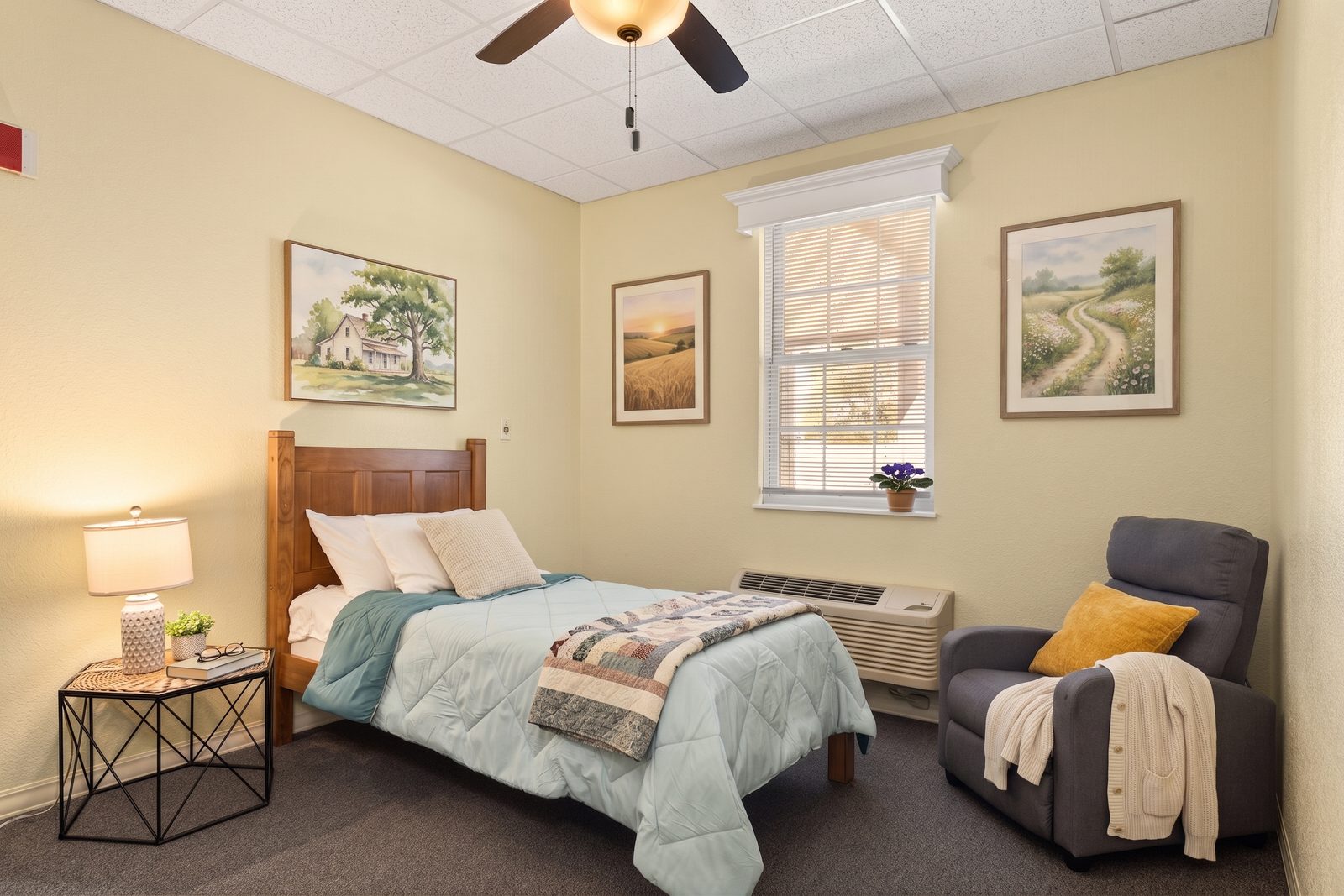
For families
One step at a time, at your pace.
You don't have to have it all figured out before you call. Most families reach us in the middle of a hard season, unsure what they even need. Here's what happens next.
Talk with us
Call or send a note and ask anything. No pressure, no obligation, just honest answers from people who do this every day.
Visit a household
Walk through, see a bedroom, meet the caregivers, sit on the porch. Bring your loved one if that feels right, or come on your own first.
A care assessment
Our nurse gets to know your loved one, their needs, history, and routines, then builds a care plan and clear pricing with you.
Settling in
We help plan the move, set up the bedroom with familiar things, and stay close through the first days and weeks, for them and for you.
You don't stop being their family
Let us carry the caregiving.
When someone you love has dementia, the caregiving can quietly take over the relationship. You're still their daughter, their son, their husband, but so much of your time together becomes managing, worrying, and doing. You aren't giving up your role as their family. You're letting us take the caregiving so the time you spend together can go back to being time together.
Many families don't realize how much they've been carrying until they finally get to set it down. This becomes their home, and your peace of mind.
“You take care of just loving them. Let us do the caregiving.”
Visit us
Come see for yourself.
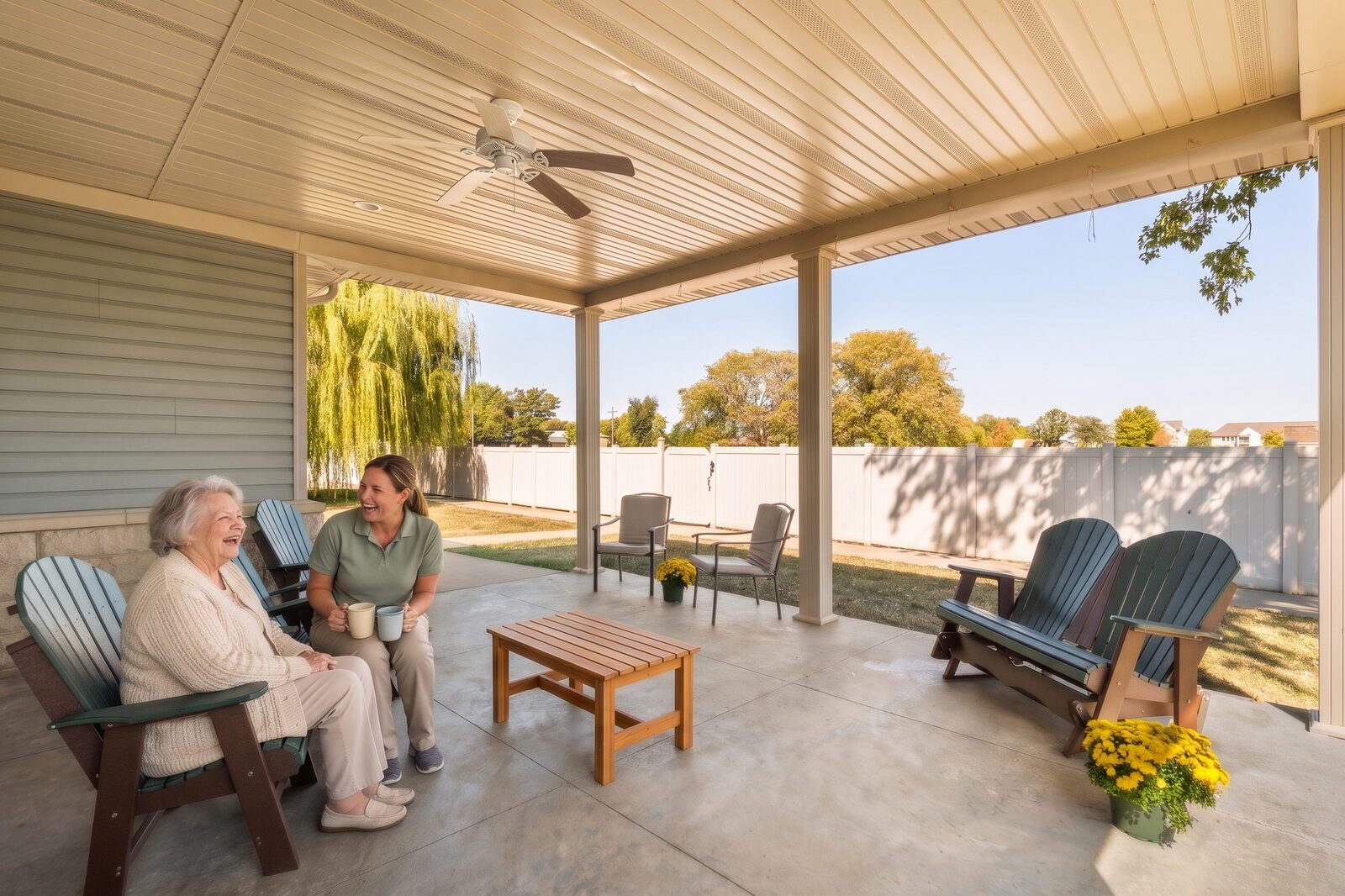
The best way to understand Savoy Place is to walk through it. And you won't find traditional visiting hours here, because you don't need visiting hours to go to Mom's house. Come sit on the porch, have coffee, spend an afternoon. Tours are available most days, including evenings and weekends by appointment, in Savoy, just minutes from Champaign and Urbana.
Do you have visiting hours?
No. You're welcome to see your loved one whenever you'd like. Come for a meal (just give us a little notice so we can set a place), watch TV together, or sit on the porch. You don't stop being family when they move here, and we want you to eventually stop feeling like a visitor.
Can you care for someone whose needs are more advanced?
Often, yes. Because memory care is all we do, we can care for many residents that a small memory-care wing inside a larger facility can't. Illinois assisted living and shared housing law limits what any community can provide, so we assess needs continuously and, if a higher level of care ever becomes necessary, we give families early notice and help navigate the move.
How much does it cost?
Pricing depends on the bedroom and each resident's assessed level of care. We'll walk you through clear monthly pricing during your visit, with nothing hidden and nothing left vague.
What if we need care quickly?
Call us. If a hospital discharge, a fall, or caregiver exhaustion means you need help soon, we can often complete an assessment and welcome a new resident within days.
Can my loved one bring their own furniture?
Yes, and we encourage it. Their bedroom is their private space, and familiar furniture, photographs, and blankets help it feel like their room from the very first night.
How is this different from assisted living?
Assisted living serves people who mostly direct their own day. Savoy Place is built entirely for people living with Alzheimer's and other dementias, small cottage households, specially trained caregivers, a secure building, and days shaped around memory loss.
- Call us
- Call (217) 600-7705
- Address
- 406 Curtis Road
Savoy, Illinois 61874 - Tours
- Most days, with evening and weekend times by appointment
Send us a message
Tell us a little about your situation and we'll reach out. It takes about a minute.
Or reach us directly: (217) 600-7705 · [email protected]